
Buying Guide
Holding Cabinet Buying Guide
Holding, banquet, cook-and-hold or proofing – four genuinely different cabinets, matched to what you are actually holding.
What Matters Most
Holding cabinet
Bridges the gap between cooking a batch and service – keeps already-cooked food safe.
Banquet cabinet
For moving large batches any real distance – catering, banquets, off-site service.
Cook and hold
Cooks low-and-slow, then automatically shifts to holding – built for unattended cooking.
Proofing cabinet
Humidity-controlled warm holding for dough, not general food holding.
“Holding cabinet” covers a few genuinely different pieces of equipment – each built to keep food at a specific state for a specific stretch of time. Picking the right type starts with what you are actually holding and for how long, not just the general category name.
The main holding cabinet types
| Type | What it does | Best for |
|---|---|---|
| Holding cabinet | Keeps already-cooked hot food at a safe serving temperature | Bridging the gap between cooking and service |
| Banquet cabinet | Holds and transports large batches of plated or bulk food | Catering, banquets, off-site service |
| Cook and hold cabinet | Cooks food at low temperature, then automatically shifts to holding | Slow-roasted proteins, unattended overnight cooking |
| Proofing cabinet | Holds dough at a controlled warm, humid temperature to proof before baking | Bakery and pizza dough programs |
Holding cabinets
A standard holding cabinet keeps already-cooked food at a safe holding temperature until service, bridging the gap between the kitchen finishing a batch and the front of house needing it. Insulated cabinet construction matters here – a well-insulated unit holds temperature more evenly and costs less to run than a poorly insulated one working harder to compensate.
Banquet cabinets
A banquet cabinet is built to hold and move large batches of plated or bulk food, often on wheels, for catering and off-site or multi-room service. If your operation regularly moves hot food any real distance – between a kitchen and a banquet hall, for instance – a banquet cabinet’s mobility and larger capacity earn their extra cost over a standard holding cabinet.
Cook and hold cabinets
A cook and hold cabinet cooks food at a low, controlled temperature and then automatically shifts to a holding mode once it reaches target temperature – useful for slow-roasted proteins or unattended overnight cooking where consistent low-and-slow heat matters more than speed. This is a genuinely different piece of equipment from a standard holding cabinet, not just a holding cabinet with an oven mode, since the whole point is the automatic cook-to-hold transition.
Proofing cabinets
A proofing cabinet holds dough at a controlled warm, humid temperature so it proofs consistently before baking, which matters most to a bakery or pizza program running dough on a schedule. Humidity control is the feature that separates a real proofing cabinet from a standard warm holding cabinet – dough proofs poorly in dry heat.
Sizing and capacity
All four types are sized by pan capacity, commonly full-size sheet or hotel pan counts per section. Size to your actual batch volume and how long food realistically sits in holding before service, not to your kitchen’s theoretical maximum output – oversizing a holding cabinet wastes both purchase cost and standby energy holding empty space at temperature.
New vs. used
A used holding, banquet, cook and hold, or proofing cabinet can be a practical way to add capacity on a tighter budget, provided the insulation, door gaskets, and (for cook and hold units) the temperature probe are checked. Husky Select pre-owned equipment is inspected before listing and carries an added 30-day Husky warranty on top of whatever service life remains on the unit.
Shop Related Equipment
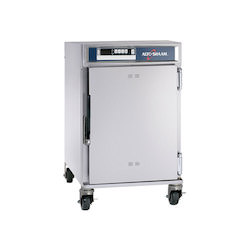
Holding Cabinets
Keep already-cooked food at a safe serving temperature.
Shop Category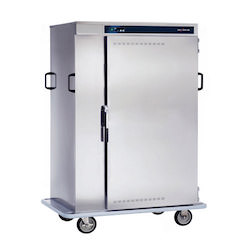
Banquet Cabinets
Mobile capacity for catering and off-site service.
Shop Category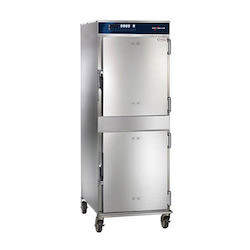
Cook & Hold Cabinets
Automatic cook-to-hold for slow-roasted or unattended cooking.
Shop Category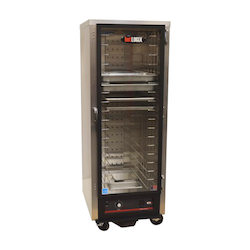
Proofing Cabinets
Humidity-controlled dough proofing for bakery and pizza programs.
Shop CategoryFinancing, Delivery & Warranty
Once you know what you need, Husky can help with financing, coordinate delivery, and stands behind every purchase with real warranty support.
Frequently Asked Questions
What is the difference between a holding cabinet and a banquet cabinet?
A standard holding cabinet keeps already-cooked food safe between the kitchen and service, generally in one location. A banquet cabinet is built to hold and move large batches of food, often on wheels, for catering or off-site and multi-room service.
What does a cook and hold cabinet do differently?
It cooks food at a low, controlled temperature and then automatically shifts to a holding mode once it reaches target temperature – genuinely different from a standard holding cabinet, since the automatic cook-to-hold transition is the whole point, not just an added oven mode.
Do I need a proofing cabinet or a regular holding cabinet for dough?
A proofing cabinet, if dough is involved. Humidity control is what separates a real proofing cabinet from a standard warm holding cabinet – dough proofs poorly in dry heat, so a bakery or pizza program running dough on a schedule needs the humidity control specifically.
How do I size a holding cabinet?
Size to your actual batch volume and how long food realistically sits in holding before service, not your kitchen theoretical maximum output. Oversizing wastes both purchase cost and standby energy holding empty space at temperature.
Is a used holding cabinet a good option?
It can be, provided the insulation, door gaskets, and (for cook and hold units) the temperature probe are checked. Husky Select pre-owned equipment is inspected and carries an added 30-day Husky warranty on top of whatever service life remains on the unit.
Ready to Buy?
Tell Husky what you need and get a quote — for one unit or a full kitchen package.