
Buying Guide
Convection Oven Buying Guide
Gas vs. electric, single vs. stacked deck, and full-size vs. half-size pan capacity – matched to how your kitchen actually bakes and roasts.
What Matters Most
Fuel
Fan drives convection either way; pick fuel based on your utilities, not baking myths.
Deck count
Single deck for steady volume; stacked/double deck only if genuinely capacity-constrained.
Pan size
Full-size for standard sheet pan workflows; half-size for smaller kitchens or satellite stations.
Cooking adjustment
Convection usually runs lower/shorter than conventional-oven recipes – test on your own menu.
Used option
Husky Select pre-owned adds a 30-day Husky warranty on top of remaining service life.
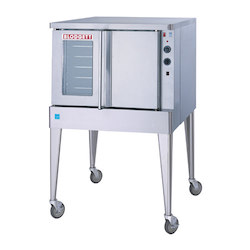
A convection oven earns its place in a kitchen by baking, roasting and reheating more evenly than a standard deck or conventional oven, thanks to a fan that circulates hot air around the food. The buying decision comes down to fuel type, deck count, and whether your menu actually needs full-size sheet pan capacity.
Gas vs. electric convection ovens
Gas convection ovens generally cost less to run where gas rates are lower than electric, and recover temperature quickly after the door opens. Electric convection ovens tend to hold a more stable, even temperature and don’t need a gas line, which matters if your kitchen’s utilities favor electric. Both fuel types circulate air the same way – the fan, not the fuel, is what makes an oven “convection.” Choose based on your kitchen’s utility setup and existing equipment mix, not on a general belief that one fuel bakes better.
Single deck vs. double (stacked) deck
A single-deck convection oven is the standard choice for a kitchen baking or roasting a moderate, steady volume through service. A double or stacked deck effectively doubles capacity in the same footprint – useful for a bakery program, banquet volume, or a menu that runs the oven near-constantly through a shift. Stacking two ovens costs more upfront and draws more power or gas, so it’s worth it only if you’re genuinely capacity-constrained on a single deck, not as a default upgrade.
Full-size vs. half-size pan capacity
Full-size convection ovens hold standard full sheet pans, which most commercial bakeries and high-volume kitchens are built around. Half-size (countertop) convection ovens take up less space and lower-cost utility service, and suit a smaller-volume kitchen, a satellite station, or a menu that doesn’t need full sheet pan runs. Check your existing pan inventory and prep workflow before downsizing – retooling to half-size pans across a kitchen is a bigger change than it looks.
What convection actually changes in cooking
The moving air in a convection oven speeds up cooking and browns more evenly than a still-air oven, which usually means lower temperatures or shorter times than a conventional-oven recipe calls for – exact adjustments vary by dish and by model, so treat published conversion charts as a starting point, not a fixed rule, and adjust to your own menu through testing. It also means densely packed pans can block airflow and reduce the benefit, so leave clearance between pans rather than maximizing every rack.
Space and ventilation
Gas convection ovens typically require exhaust hood coverage; requirements for electric convection ovens vary by local code and by how the oven is used. Hood, makeup-air and clearance requirements are set by your local authority having jurisdiction, so confirm before you order rather than after installation. Also confirm door swing clearance and whether the unit needs to sit against a wall or can be placed mid-kitchen.
New vs. used
A used convection oven can be a solid way to add baking or roasting capacity without full new-equipment cost. Husky Select pre-owned equipment is inspected before listing and carries an added 30-day Husky warranty on top of whatever service life remains on the unit – check the fan motor and door seal condition carefully, since those see the most wear over time.
Financing, Delivery & Warranty
Once you know what you need, Husky can help with financing, coordinate delivery, and stands behind every purchase with real warranty support.
Frequently Asked Questions
Is gas or electric better for a convection oven?
Neither is universally better – both fuel types circulate air the same way, since the fan is what makes an oven convection, not the fuel. Gas recovers temperature faster after the door opens; electric holds a more stable temperature and skips the gas line. Choose based on your kitchen utilities.
Do I need a double (stacked) deck oven?
Only if a single deck genuinely cannot keep up with your volume – a bakery program or heavy banquet schedule, for example. A stacked deck costs more upfront and draws more power or gas, so it is not worth it as a default upgrade if a single deck already handles your current volume.
Should I get full-size or half-size pan capacity?
Full-size fits standard sheet pans and suits most commercial kitchens. Half-size suits a smaller-volume kitchen, satellite station, or tighter footprint – but check your existing pan inventory first, since switching pan sizes is a bigger workflow change than it looks.
Do I need to change my recipes for a convection oven?
Usually yes, in some form – convection ovens cook faster and brown more evenly than a still-air oven, so most conventional-oven recipes need a lower temperature or shorter time. Exact adjustments vary by dish and model, so treat published conversion charts as a starting point and test on your own menu.
Do I need a hood for a convection oven?
Gas convection ovens typically do. Requirements for electric convection ovens vary by local code and how the oven is used. Hood, makeup-air and clearance requirements are set by your local authority having jurisdiction, so confirm before you order.
Is a used convection oven a good option?
It can be, especially for adding capacity without full new-equipment cost. Husky Select pre-owned equipment is inspected and carries an added 30-day Husky warranty on top of whatever service life remains on the unit. Check the fan motor and door seal carefully, since those see the most wear.
Ready to Buy?
Tell Husky what you need and get a quote — for one unit or a full kitchen package.