
Buying Guide
Reach-In Refrigerators Buying Guide
Door count, door style, and compressor placement matched to your actual storage turnover, not your full walk-in inventory.
What Matters Most
Door style
Solid holds temperature more stably; glass cuts down on unnecessary door-opening.
Sections
Count your actual daily storage turnover, not maximum theoretical capacity.
Compressor
Top-mount avoids floor spills and clearance needs; bottom-mount keeps overall height lower.
Temperature
Confirm the model rated range against your jurisdiction food-safety requirements.
Used option
Check gasket condition first – it directly affects efficiency and temperature stability.
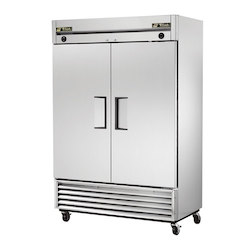
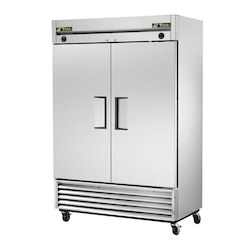
A reach-in refrigerator is the workhorse cold-storage unit behind most commercial kitchens – opened dozens of times an hour, holding everything from prepped ingredients to finished product. The buying decision comes down to door count, door style, and capacity matched to your actual storage turnover, not your full walk-in inventory.
Solid vs. glass doors
A solid door holds a more stable internal temperature since it is not letting in light or losing cold air visibly with every glance, and is the standard choice for back-of-house prep and bulk storage. A glass door lets staff see contents without opening the unit, which cuts down on unnecessary door-opening and the temperature swings that come with it, but only makes sense where visibility actually helps a workflow – a glass door on a walk-in-style back-of-house unit mostly just adds cost without a real benefit.
One, two, or three sections
A single-section reach-in suits a smaller kitchen or a satellite prep station with a focused storage need. Two and three-section units add capacity in the same general footprint depth, useful for a kitchen storing higher volumes of prepped ingredients or finished product across a full shift. Count your actual daily storage turnover – how much comes in and goes out between deliveries – rather than sizing for maximum theoretical capacity.
Half doors and mixed configurations
Some reach-ins offer half-height doors on one or more sections, letting staff access a lower shelf without swinging open the whole door and losing cold air from the upper shelves. This is a genuinely useful feature for a station with mixed-height storage needs but adds cost and is not necessary for straightforward bulk storage.
Compressor placement
Top-mount compressors keep the compressor away from splashes and spills on the kitchen floor and are easier to service without floor-level clearance, but add slightly to the unit’s total height. Bottom-mount compressors keep the unit’s overall height lower, which matters under a low ceiling or counter run, but need floor-level clearance for airflow and are more exposed to spills. Check your ceiling height and floor layout before choosing.
Temperature range and food safety
A standard reach-in refrigerator holds product in the refrigerated range required by food-safety regulations in your jurisdiction – check your local health authority’s exact requirements rather than assuming a single number applies everywhere, and confirm the model’s rated temperature range against your menu’s actual storage needs (some items need colder holding than others).
New vs. used
A used reach-in refrigerator can be a practical way to add cold storage without full new-equipment cost, provided the compressor and door gaskets are in good working condition – gaskets in particular wear out and directly affect energy efficiency and internal temperature stability. Husky Select pre-owned equipment is inspected before listing and carries an added 30-day Husky warranty on top of whatever service life remains on the unit.
Financing, Delivery & Warranty
Once you know what you need, Husky can help with financing, coordinate delivery, and stands behind every purchase with real warranty support.
Frequently Asked Questions
Solid or glass door reach-in refrigerator – which do I need?
Solid doors hold a more stable internal temperature and are the standard for back-of-house prep and bulk storage. Glass doors let staff see contents without opening the unit, which helps in a setup where visibility matters, but add cost without much benefit on a purely back-of-house unit.
How many sections do I need?
Count your actual daily storage turnover – how much comes in and goes out between deliveries – rather than sizing for maximum theoretical capacity. A single section suits a smaller kitchen or satellite station; two or three sections suit higher-volume storage needs.
Top-mount or bottom-mount compressor?
Top-mount keeps the compressor away from floor spills and is easier to service without floor clearance, but adds to overall unit height. Bottom-mount keeps overall height lower, which matters under a low ceiling, but needs floor-level clearance for airflow and is more exposed to spills.
What temperature should a reach-in refrigerator hold?
It needs to hold product in the refrigerated range required by food-safety regulations in your jurisdiction – check your local health authority exact requirements rather than assuming a single number applies everywhere, and confirm the model rated range against your menu storage needs.
Is a used reach-in refrigerator a good option?
It can be, provided the compressor and door gaskets are in good condition – gaskets wear out and directly affect energy efficiency and temperature stability. Husky Select pre-owned equipment is inspected and carries an added 30-day Husky warranty on top of whatever service life remains on the unit.
Ready to Buy?
Tell Husky what you need and get a quote — for one unit or a full kitchen package.