
Buying Guide
Sandwich Prep Table Buying Guide
Pan configuration, cutting board depth, and refrigerated base capacity matched to your menu and prep-line layout.
What Matters Most
Compressor
Top-mount eases servicing but adds height; rear-mount keeps height lower.
Pan count
Size to how many toppings need simultaneous access during a rush, not total menu items.
Base storage
Open shelving or refrigerated doors/drawers below the cutting board for backup stock.
Doors vs. drawers
Doors cost less and hold more; drawers give faster access without losing cold air.
Used option
Check the cutting board surface – deep cut grooves can harbor bacteria even on a sound unit.
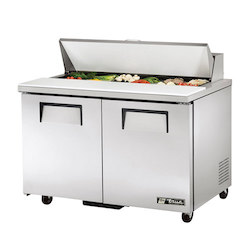
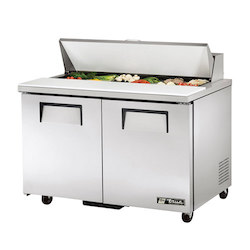
A sandwich prep table combines refrigerated ingredient storage with a cutting surface, keeping toppings cold and within reach during service. The buying decision comes down to pan configuration, cutting board depth, and refrigerated base capacity matched to your menu and line layout.
Top-mount vs. rear-mount refrigeration
A top-mount unit keeps the compressor above the cutting board area, out of the way of splashes and easier to service, but adds to the unit’s overall height, which can put the top rail near or above a shorter staff member’s comfortable reach. A rear-mount unit keeps the compressor lower and out of sight behind the unit, at the cost of slightly more exposure to spills. Check your staff’s typical height range and kitchen layout before choosing.
Pan configuration
Pan wells commonly run in a single row across the back rail, sized for standard 1/6 or 1/3 size pans. Count how many distinct toppings your menu actually needs simultaneous access to during a rush, then size pan count to that – a table with more pan wells than your menu uses just wastes refrigerated capacity and counter space.
Cutting board depth and undercounter storage
Cutting board depth affects how much prep space staff have without reaching over the pan rail. Undercounter space below the cutting board typically holds either open shelving or a refrigerated base with doors or drawers – useful for backup ingredient storage or bulk-prepped items that do not need to be in the top pan rail during a given shift.
Number of doors or drawers
Solid doors keep the undercounter section fully enclosed and are the standard, lower-cost option. Drawers give faster access to backup stock without opening a full door and losing cold air, but cost more and hold less per linear foot than doors of the same width. Match this to how often your team actually restocks from the base during service.
Sizing to your line
Sandwich prep tables are sized by overall length, commonly in 27 to 96+ inch runs, driven mostly by how many pan wells and how much undercounter storage you need. Size to your actual topping count and busiest-hour prep volume, not to your full printed menu – a table sized for peak service handles slower periods without issue.
New vs. used
A used sandwich prep table can be a practical way to add prep-line capacity on a tighter budget, provided the compressor, gaskets, and cutting board surface are checked – a worn cutting board can harbor bacteria in deep cut grooves and may need replacement even on an otherwise sound unit. Husky Select pre-owned equipment is inspected before listing and carries an added 30-day Husky warranty on top of whatever service life remains on the unit.
Financing, Delivery & Warranty
Once you know what you need, Husky can help with financing, coordinate delivery, and stands behind every purchase with real warranty support.
Frequently Asked Questions
Top-mount or rear-mount refrigeration on a prep table?
Top-mount keeps the compressor above the cutting board area, easier to service and away from spills, but adds to overall height. Rear-mount keeps overall height lower, at the cost of slightly more exposure to spills. Check your kitchen layout and staff height range before choosing.
How many pan wells do I need?
Count how many distinct toppings your menu needs simultaneous access to during a rush, then size pan count to that. A table with more pan wells than your menu actually uses just wastes refrigerated capacity and counter space.
Doors or drawers for the undercounter base?
Solid doors are the standard, lower-cost option and keep the base fully enclosed. Drawers give faster access to backup stock without opening a full door and losing cold air, but cost more and hold less per linear foot. Match this to how often your team restocks during service.
What length prep table do I need?
Length is driven mostly by pan-well count and undercounter storage need. Size to your actual topping count and busiest-hour prep volume rather than your full printed menu – a table sized for peak service handles slower periods without issue.
Is a used sandwich prep table a good option?
It can be, provided the compressor, gaskets, and cutting board surface are checked. A worn cutting board with deep cut grooves can harbor bacteria and may need replacement even on an otherwise sound unit. Husky Select pre-owned equipment is inspected and carries an added 30-day Husky warranty on top of whatever service life remains on the unit.
Ready to Buy?
Tell Husky what you need and get a quote — for one unit or a full kitchen package.