
Buying Guide
Glassdoor Merchandisers
Reach-in, open-air, wine and countertop merchandisers compared – and how to size one to your space.
What Matters Most
Merchandiser vs. reach-in
Customer-facing display needs a merchandiser; staff-only storage is cheaper as a standard reach-in.
Door style
Sealed glass doors hold temperature more efficiently; open-air units grab faster but cost more to run.
Sizing
Size to shelf-front width – how much product actually faces the customer, not just cubic capacity.
Lighting
LED interior lighting runs cooler and lowers compressor load versus older fluorescent fixtures.
Buying used
Check door gaskets and compressor cycle before buying – Husky Select adds a 30-day warranty on pre-owned units.
A glass-door merchandiser sells for you – it’s the unit doing the work while nobody’s behind the counter, so the right type depends more on how customers grab product than on raw capacity. This guide breaks down the real merchandiser types side by side, since “glass door fridge” covers several genuinely different pieces of equipment.
Merchandiser vs. Reach-In Refrigerator
A reach-in refrigerator is built for back-of-house storage – solid or glass doors, but designed around staff access, not customer browsing. A merchandiser is built to display and sell: brighter interior lighting, more visible shelving, and in most cases a glass door built for frequent opening by customers rather than occasional opening by staff. If the unit faces customers, buy a merchandiser; if it’s staff-only storage, a standard reach-in almost always costs less for the same capacity.
The Main Merchandiser Types
| Type | Best For | Trade-Off |
|---|---|---|
| Reach-In Glass Door | Grab-and-go retail, beverage and packaged-food display where efficiency matters | The door creates a sealed barrier, so it holds temperature more efficiently than an open-front unit – but customers have to open it to grab product |
| Open-Air / Air Curtain | High-traffic convenience and grocery settings where speed of grab matters most | No door means faster, easier grabs and better visibility, but a constant air curtain uses more energy to hold temperature than a sealed door |
| Wine & Specialty Refrigeration | Wine, craft beverage or temperature-sensitive specialty product | Built for a narrower, more stable temperature band than general beverage merchandising – not a substitute for general-purpose display |
| Countertop Merchandiser | A checkout-counter impulse zone where floor space isn’t available | Small footprint means limited capacity – best as a second unit, not a store’s primary display |
Sizing a Merchandiser to Your Space
Merchandisers are sized by door count and cubic footage, but the number that actually matters is shelf-front width – how much product can face the customer at once, not just how much fits inside. A single-door unit with well-spaced adjustable shelving often displays better than a cramped multi-door unit packed too tight to see into. Measure your available floor footprint first, then work backward to a door count that fits it without crowding the walking path.
LED Lighting and Visibility
LED interior lighting has become close to standard on new merchandisers – it runs cooler than older fluorescent fixtures, which reduces the compressor’s workload, and it lights product more evenly edge to edge. If you’re comparing a used or older unit against a new one, confirm the lighting type; it affects both product appeal and the unit’s real energy draw.
Common Mistakes to Avoid
- Buying a reach-in refrigerator for a customer-facing display role instead of a true merchandiser
- Choosing open-air for its convenience without accounting for the higher energy cost of running the air curtain continuously
- Packing shelving too tight to actually see or reach product, which defeats the purpose of a merchandiser
- Buying used without checking door gaskets and compressor condition – a worn gasket on a glass-door unit is a common, expensive-to-ignore energy leak
Buying Used
A used merchandiser can be a good value if the gaskets seal properly and the compressor runs a normal cycle – ask to see it running before you buy, not just plugged in. Husky Select pre-owned equipment carries an added 30-day Husky warranty on top of the unit’s remaining service life; see Husky’s full warranty terms for how that works alongside any manufacturer coverage still in effect.
Shop Related Equipment
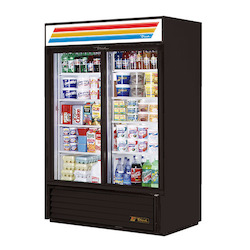
All Merchandisers
Browse the full merchandiser lineup by door count and configuration.
Shop Category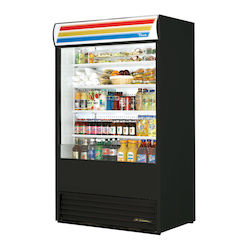
Open-Air Merchandisers
Air-curtain units built for fast, high-traffic grab-and-go.
Shop Category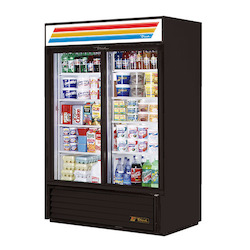
Merchandising Refrigerators
Sealed glass-door units for efficient beverage and food display.
Shop Category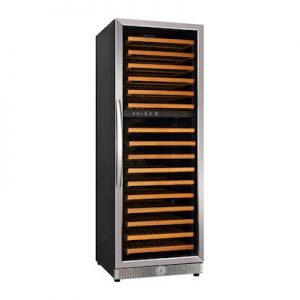
Wine Coolers
Stable, narrower-band refrigeration for wine and specialty beverage.
Shop CategoryFinancing, Delivery & Warranty
Once you know what you need, Husky can help with financing, coordinate delivery, and stands behind every purchase with real warranty support.
Frequently Asked Questions
What's the difference between a merchandiser and a reach-in refrigerator?
A reach-in is built for back-of-house storage with staff access in mind. A merchandiser is built to display and sell – brighter lighting, more visible shelving, and a door designed for frequent customer opening. If it faces customers, it should be a merchandiser.
Open-air or glass-door merchandiser – which uses less energy?
A sealed glass door holds temperature more efficiently, since there's no continuous air curtain working to hold the cold air in. Open-air units trade that efficiency for faster, easier product grabs in high-traffic settings.
How do I size a merchandiser for my store?
Measure your available floor footprint first, then choose a door count based on shelf-front width – how much product can actually face the customer – rather than cubic capacity alone. A well-spaced single-door unit often displays better than a crowded multi-door unit.
Does LED lighting matter in a merchandiser?
Yes – LED runs cooler than older fluorescent lighting, which reduces the compressor's workload and lights product more evenly. It's close to standard on new units; worth confirming if you're comparing against an older or used merchandiser.
What should I check before buying a used merchandiser?
Door gaskets and compressor cycle first – ask to see the unit running, not just plugged in. A worn gasket on a glass-door unit is a common, expensive-to-ignore energy leak. Husky Select pre-owned units carry an added 30-day Husky warranty.
Are wine coolers the same as a beverage merchandiser?
No – wine and specialty refrigeration holds a narrower, more stable temperature band suited to wine and temperature-sensitive product. It isn't a substitute for general-purpose beverage or food merchandising.
Ready to Buy?
Tell Husky what you need and get a quote — for one unit or a full kitchen package.