
Buying Guide
Hot Plate Buying Guide
Gas vs. electric, open burner vs. French plate, and burner count matched to what you are actually cooking on it.
What Matters Most
Fuel
Gas gives responsive flame control; electric skips the gas line for a satellite station.
Style
Open burner for quick, responsive heat; French plate for steady, even simmering heat.
Burner count
Size to what genuinely needs to be on the hot plate at your busiest stretch, not more.
Specs
BTU output and dimensions vary by model within any brand – check the individual listing.
A commercial hot plate adds compact, flexible cooking capacity – a sauce station, an overflow burner, a satellite prep area – without the footprint of a full range. The buying decision comes down to fuel type and burner count matched to what you are actually cooking on it.
Gas vs. electric hot plates
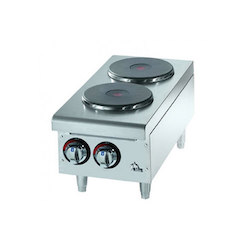
Gas hot plates give the same responsive flame control cooks expect from a range burner, and are the standard choice where a gas line is already in place. Electric hot plates skip the gas line entirely, useful for a satellite station or a space where running gas is not practical, at the cost of slightly slower heat response than an open flame. Choose based on your utilities and how much fine burner control your specific use actually needs.
Open burner vs. French plate style
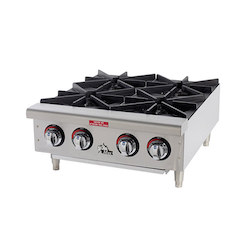
An open-burner hot plate uses individual gas burners, giving each pot or pan its own direct flame and quick temperature adjustment. A French plate (solid top) style spreads heat across a continuous surface, holding a more even, gentler heat that suits simmering or holding rather than fast high-heat cooking. Match the style to whether your station needs quick, responsive burners or steady, even low heat.
Burner or plate count
Hot plates commonly come in one, two, or four-burner configurations. Count how many pots or pans genuinely need to be on the hot plate at once during your busiest stretch, then size to that – a hot plate is meant to supplement a main cook line, not replace it, so oversizing here usually just duplicates capacity you already have on the range.
Space and ventilation
Gas hot plates typically require exhaust hood coverage in most jurisdictions; requirements for electric hot plates vary by local code and how the unit is used. Hood, clearance and fire-suppression requirements are set by your local authority having jurisdiction, so confirm before you order rather than after installation.
Brand options
Husky carries hot plates from several manufacturers, including Vulcan – a cooking-equipment brand tracing back to 1865, now part of the Vulcan Food Equipment Group and one of the larger single-brand manufacturers of commercial cooking equipment. Exact specifications (BTU output, dimensions, burner spacing) vary by model within any brand’s lineup, so check the individual product listing rather than assuming a brand-wide figure.
New vs. used
A used hot plate can be a reasonable, low-cost way to add supplemental burner capacity, provided the burners and controls are in good working condition. Husky Select pre-owned equipment is inspected before listing and carries an added 30-day Husky warranty on top of whatever service life remains on the unit.
Financing, Delivery & Warranty
Once you know what you need, Husky can help with financing, coordinate delivery, and stands behind every purchase with real warranty support.
Frequently Asked Questions
Is gas or electric better for a hot plate?
Gas gives the same responsive flame control cooks expect from a range burner and is standard where a gas line already exists. Electric skips the gas line entirely, useful for a satellite station or where running gas is not practical, at the cost of slightly slower heat response.
Open burner or French plate style?
Open burner gives each pot its own direct flame and quick adjustment. French plate (solid top) spreads heat evenly across a continuous surface, better suited to simmering or holding than fast high-heat cooking. Match the style to how you actually use the station.
How many burners do I need?
Count how many pots or pans genuinely need to be on the hot plate at once during your busiest stretch. A hot plate is meant to supplement a main cook line, not replace it, so oversizing usually just duplicates capacity you already have on the range.
Do I need a hood for a hot plate?
Gas hot plates typically do in most jurisdictions; requirements for electric hot plates vary by local code and use. Hood and clearance requirements are set by your local authority having jurisdiction, so confirm before you order.
Does the brand matter for a hot plate?
Husky carries hot plates from several manufacturers, including Vulcan. Exact specifications like BTU output and burner spacing vary by model within any brand lineup, so check the individual product listing rather than assuming a single brand-wide figure.
Is a used hot plate a good option?
It can be, provided the burners and controls are in good working condition. Husky Select pre-owned equipment is inspected and carries an added 30-day Husky warranty on top of whatever service life remains on the unit.
Ready to Buy?
Tell Husky what you need and get a quote — for one unit or a full kitchen package.