
Buying Guide
Charbroiler Buying Guide
Radiant vs. lava rock, gas vs. electric, and grate width sized to your line – not a generic grill purchase.
What Matters Most
Heat style
Radiant for lower maintenance and consistent flare; lava rock for a more traditional smoky char.
Fuel
Gas is the standard for real open-flame char flavor; electric skips the gas line.
Sizing
Size grate width to how many items are on it at once during your busiest hour, not your full menu.
Grease management
Check the catch-pan/grease design – a hard-to-clean unit gets cleaned less, which is a safety issue.
Ventilation
Type I hood with fire suppression is required in most jurisdictions – confirm with your local AHJ first.
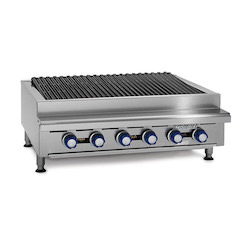
A charbroiler puts open-flame char marks and grilled flavor on steaks, burgers and vegetables that a flat griddle cannot reproduce. The buying decision comes down to radiant vs. lava rock heat, fuel type, and grate width matched to your line’s actual grilling volume.
Radiant vs. lava rock charbroilers
A radiant charbroiler uses metal radiants over the burners that catch and vaporize drippings, producing consistent flare and smoke flavor with less flare-up risk and easier cleaning. A lava rock charbroiler uses volcanic rock over the burners, producing a more traditional smoky char at the cost of more frequent rock replacement and a harder cleaning cycle, since the rocks absorb grease over time. Most commercial kitchens today run radiant models for the lower maintenance; lava rock is chosen specifically for the flavor profile some operators want.
Gas vs. electric charbroilers
Gas charbroilers are the standard for real char flavor and fast, even heat across the grate, and are what most commercial kitchens mean by “charbroiler.” Electric charbroiler options exist and skip the gas line, but genuine open-flame char comes from a gas flame – if flame-grilled flavor and appearance are the point of the purchase, that shapes the fuel decision more than utility convenience does.
Sizing grate width to your line
Charbroilers are sized by grate width, commonly in 24 to 60+ inch runs. Count how many items are typically on the grate at once during your busiest hour – burgers on a weekend rush look very different from steaks on a slow Tuesday – and size to that, plus a working margin. Undersizing forces batching and slows ticket times during a rush; oversizing wastes both counter space and standby gas.
Grates and grease management
Grate style affects both flavor and cleaning: heavier cast iron grates hold heat longer and produce more consistent char marks but take longer to heat and cool. Check how the unit routes grease – a good grease management and catch-pan design matters as much day-to-day as raw output, since a charbroiler that is hard to clean gets cleaned less often, which is a fire-safety issue as well as a food-safety one.
Space and ventilation
Charbroilers produce significant grease-laden vapor and, in most jurisdictions, require Type I exhaust hood coverage with fire suppression – this is one of the least optional ventilation requirements in a commercial kitchen given the open flame and grease volume involved. Hood, fire-suppression and clearance requirements are set by your local authority having jurisdiction, so confirm before you order, not after installation.
New vs. used
A used charbroiler can be a reasonable way to add a grill station on a tighter budget, provided the grates and burners are in good working condition – charbroilers see some of the heaviest daily wear of any cooking equipment. Husky Select pre-owned equipment is inspected before listing and carries an added 30-day Husky warranty on top of whatever service life remains on the unit.
Financing, Delivery & Warranty
Once you know what you need, Husky can help with financing, coordinate delivery, and stands behind every purchase with real warranty support.
Frequently Asked Questions
What is the difference between radiant and lava rock charbroilers?
A radiant charbroiler uses metal radiants that catch drippings and vaporize them, giving consistent flare with easier cleaning. A lava rock charbroiler uses volcanic rock over the burners for a more traditional smoky char, at the cost of more frequent rock replacement and harder cleaning. Most kitchens today run radiant for the lower maintenance.
Should I get a gas or electric charbroiler?
Gas is the standard for real open-flame char flavor and is what most commercial kitchens mean by charbroiler. Electric options exist and skip the gas line, but if flame-grilled flavor is the reason you are buying a charbroiler, that points toward gas over utility convenience.
What grate width do I need?
Count how many items are typically on the grate at once during your busiest hour, then size to that plus a working margin. Sizing to a weekend rush rather than a slow weekday is the safer approach – undersizing forces batching and slows ticket times.
Do I need a hood for a charbroiler?
In most jurisdictions, yes, with fire suppression – charbroilers produce significant grease-laden vapor and run an open flame, making this one of the least optional ventilation requirements in a commercial kitchen. Hood and clearance requirements are set by your local authority having jurisdiction, so confirm before you order.
Is a used charbroiler a good option?
It can be, provided the grates and burners are in good condition, since charbroilers see some of the heaviest daily wear of any cooking equipment. Husky Select pre-owned equipment is inspected and carries an added 30-day Husky warranty on top of whatever service life remains on the unit.
Ready to Buy?
Tell Husky what you need and get a quote — for one unit or a full kitchen package.